
Is It Time To Reappraise An Art Collection?

When Should A Collection Be Reappraised?

A collection’s value is not static. In the face of changing economic headwinds and the ever-shifting market for art and collectibles, values for the most cherished items might fluctuate more than expected. An up-to-date appraisal gives owners and their advisors an objective understanding of what their collection is worth—and helps ensure that insurance, estate and trust planning and administration, charitable giving, and other decisions are based on current information.

5 Reasons to Reappraise

There’s no fixed timetable for reappraisals. Collectors should instead consider the following factors when deciding the right time to reappraise:

  • It has been several years since the prior appraisal.
  • There has been a change in the insurance provider or coverage.
  • An artist or work has received significant scholarly, museum, or market attention.
  • The owner is contemplating the following: a sale, gift, donation, trust transfer, or some form of estate planning.
  •  A major life event or change in ownership has occurred.

Know Your Value

The right value depends on the purpose of the appraisal.

  • Retail Replacement Value (RRV): Used only for insurance purposes, the RRV represents the highest value a collector would reasonably need to pay to replace a work of art or object. If a collector relies solely on a homeowner’s policy to cover their collection, there is a significant risk of inadequate coverage. Even with a scheduled policy, out-of-date or inaccurate appraisals can expose insureds to unnecessary risk should damage or loss occur.
  • Fair Market Value (FMV): This value represents what an artwork or item would likely sell for on the open market between a willing buyer and a willing seller. These prices are oftentimes lower than RRV. This type of value is often used for trust and estate administration and planning, gifting, and donations.
  • Marketable Cash Value (MCV): This value represents the net monetary value a client receives in the event of a liquidation event, less any applicable fees, commissions, or transaction costs.

Remember: Price is a concrete monetary amount a buyer pays for a piece at a given moment, whereas value is an opinion offered by a qualified appraiser.

Tracking Market Trends

The market for art and collectibles is complex. Between macroeconomic influences, overall industry trends, sector-level shifts, and the unique markets for individual artists and creators, there are several factors that impact the value of an object.

The market does not move uniformly. A 10% increase in an overall art-market index does not mean that every work in a collection has increased 10% in value. Individual artists, periods, mediums, and even individual works can move dramatically differently from the broader market.

Markets in Action

Firelei Baez​
Antonio Oba​
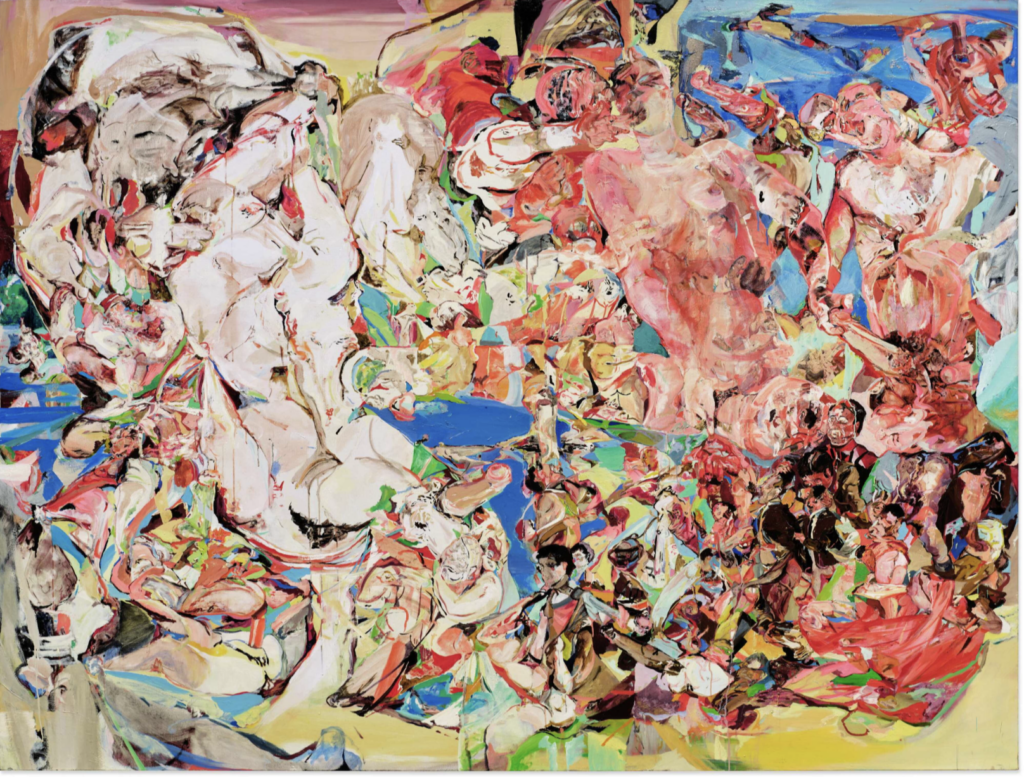
Cecily Brown​

Previous auction record (set in 2021): $100,800

Current auction record (set in 2025): $1.11 million

Previous auction record (set in 2024): $228,600

Current auction record (set in 2025): $1.02 million

Previous auction record (set in 2018): $6.78 million

Current auction record (set in 2025): $9.81 million

These examples illustrate why an appraisal should not be treated as a static document. An artist’s market can change substantially in just a few years—and the magnitude of change can vary considerably from one artist to another. For collectors, an appraisal that accurately reflected the market several years ago may no longer reflect today’s value.

Market Spotlight: Post-War / Contemporary

As recent auctions demonstrated, demand for high-quality works by big-name artists has grown explosively, and exceptional works continue to command exceptional prices. Several well-established artists sold for record-breaking highs, exceeding estimates and showing that, at the highest levels, the Postwar / Contemporary market is growing. In contrast, lower-priced segments of the market have continued to soften, with emerging artists facing subdued demand and lower results.

At the same time, institutions and private collectors have continued to expand the canon of postwar art, demonstrating that the way the market understands – and subsequently values – an artist can change significantly over time.  This type of evolution in an artist’s market is a strong signal that a collector holding the artist’s work should have their collection reappraised.

Thornton Dial Sr. is a notable example of this expansion of the Postwar / Contemporary space. Originally considered an “outsider” artist, he has become an increasingly important figure in the contemporary American art market. Significant museum acquisitions, exhibitions, and scholarly reassessment have strengthened his market profile. Though his auction market remains comparatively thin, exceptional works by Dial are both scarce and closely watched by collectors.

Butera Art Advisory is assisting a significant outsider art collection and has placed several significant works by Thornton Dial Sr. in major upcoming auctions at Christie’s New York.

Consult the Expert

Thornton Dial, Everybody’s Got a Right to the Tree of Life, 1988. Courtesy of Christie’s

Understanding these market dynamics requires more than simply looking at recent auction results. Our appraisers bring an average of 20 years of experience across their respective areas of specialization, allowing us to evaluate individual works within the broader context of the market.

If there is uncertainty about the right time to have a collection reappraised, the team at Butera Art Advisory is here to help. Reach out to speak with one of our specialists to ask questions or to discuss any object that you’re interested in having reappraised.